

Blog
How Premium Fabric Is Manufactured: From Yarn to Finished Cloth


Premium fabric is more than just a piece of cloth—it is the result of precision engineering, skilled craftsmanship, advanced technology, and strict quality control. Every luxurious fabric begins with carefully selected fibres and undergoes multiple manufacturing stages before reaching the customer.
Whether you’re a fashion enthusiast, garment manufacturer, fabric retailer, or simply curious about the textile industry, understanding how premium fabric is produced offers valuable insight into the quality behind every finished product.
In this guide, we’ll take you through the complete journey of premium fabric manufacturing—from yarn selection to the final finishing process.
Step 1: Selecting High-Quality Raw Fibres
Every premium fabric begins with the right raw material.
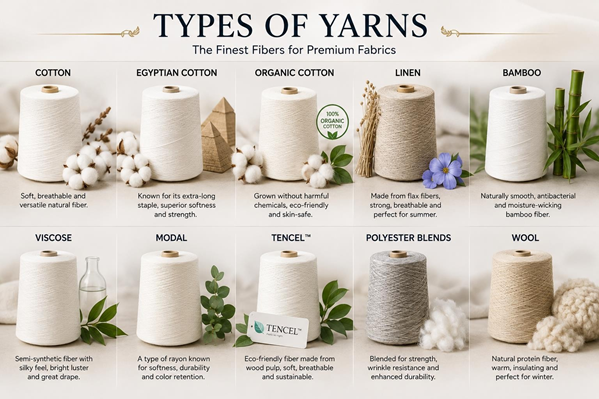
Manufacturers choose fibres based on the intended characteristics of the final fabric. Common fibres include:
What Makes Premium Fibres Different?
Premium fibres typically have:
- Longer staple length
- Higher strength
- Better uniformity
- Lower contamination
- Superior moisture absorption
The better the fiber quality, the softer and stronger the finished fabric.
Step 2: Spinning the Yarn
Spinning transforms loose fibres into continuous yarn.
This is one of the most critical stages in textile manufacturing. During spinning:
- Fibres are aligned.
- Fibres are stretched.
- Fibres are twisted.
- Yarn is wound onto cones.
Types of Yarn
Manufacturers may produce:
- Carded yarn
- Combed yarn
- Compact yarn
- Slub yarn
- Mélange yarn
- Air-jet yarn
Premium fabrics often use combed or compact-spun yarn because they offer:
- Greater softness
- Higher strength
- Less hairiness
- Better appearance
Step 3: Yarn Quality Inspection
Before weaving begins, yarn undergoes extensive testing. Quality parameters include:
- Yarn count
- Tensile strength
- Twist consistency
- Evenness
- Hairiness
- Moisture content
Only yarn meeting strict standards proceeds to the next stage.
Step 4: Warping
Warping prepares hundreds or thousands of yarns for weaving. The yarns are arranged parallel to one another on large beams. Proper warping ensures:
- Uniform tension
- Smooth weaving
- Fewer fabric defects
- Higher production speed
Step 5: Weaving the Fabric
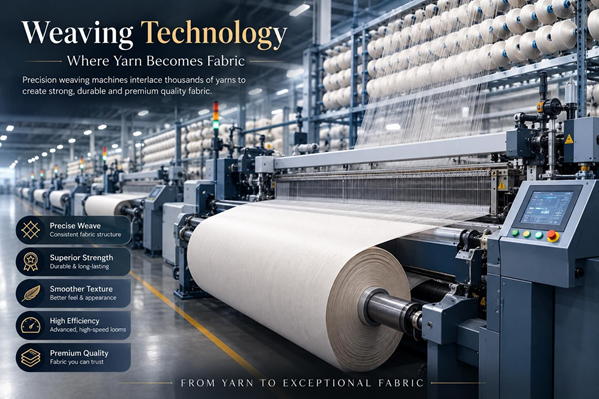
Weaving is where individual yarns become fabric. Two sets of yarn interact:
- Warp (lengthwise yarns)
- Weft (crosswise yarns)
Modern air-jet, rapier, or projectile looms interlace these yarns at high speeds with remarkable precision.
Common Weave Structures
- Plain Weave
- Twill Weave
- Satin Weave
- Oxford Weave
- Jacquard Weave
- Dobby Weave
The weave determines the fabric’s:
- Texture
- Strength
- Appearance
- Weight
- Drape
Step 6: Fabric Inspection (Grey Fabric
The newly woven fabric, known as grey fabric, is inspected before further processing. Inspectors look for:
- Broken yarns
- Missing ends
- Stains
- Oil marks
- Weaving defects
- Uneven texture
Detecting problems early reduces waste and improves efficiency.
Step 7: Dyeing the Fabric
Color is one of the defining features of premium textiles. Depending on the desired result, manufacturers may dye:
- Fibers
- Yarn
- Fabric
Modern Dyeing Techniques
- Jet Dyeing
- Jigger Dyeing
- Continuous Dyeing
- Beam Dyeing Premium dyeing ensures:
- Deep color penetration
- Excellent color fastness
- Uniform shades
- Long-lasting vibrancy
Step 8: Washing and Pretreatment
Before finishing, the fabric undergoes several treatments to remove residual chemicals and prepare it for enhanced performance.
These treatments may include:
- Desizing
- Scouring
- Bleaching
- Mercerization (for cotton finish)
- Neutralising Benefits include:
- Improved absorbency
- Better dye fixation
- Brighter appearance
- Enhanced softness
One of the most advanced technologies used in premium textile manufacturing is Liquid Ammonia Treatment. This specialised finishing process significantly enhances the appearance, feel, and performance of cotton fabrics by treating them with anhydrous liquid ammonia under carefully controlled conditions.
Unlike conventional chemical finishing, liquid ammonia penetrates deep into the cotton fibers, permanently improving their molecular structure without compromising the fabric’s natural softness and breathability.
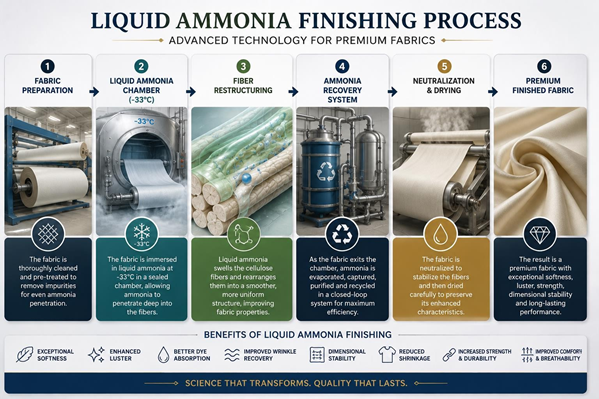
How the Liquid Ammonia Process Works
The process typically follows these stages:
1. Fabric Preparation
- The fabric is thoroughly cleaned and pre-treated to remove impurities, ensuring even penetration of liquid ammonia.
2. Liquid Ammonia Application
- The fabric passes through a sealed chamber where it is immersed in liquid ammonia at approximately −33°C. At this temperature, ammonia remains in liquid form and uniformly penetrates the cotton fibres .
3. Fiber Restructuring
- Liquid ammonia temporarily swells the cellulose fibres , allowing them to rearrange into a smoother, more uniform structure. This transformation improves both the appearance and physical properties of the fabric.
4. Ammonia Recovery
- As the fabric exits the treatment chamber, nearly all of the ammonia is evaporated, captured, purified, and recycled in a closed-loop system, making the process highly efficient and environmentally responsible.
5. Neutralisation and Drying
- The fabric is stabilised , neutralised , and carefully dried to preserve its enhanced characteristics.
Benefits of Liquid Ammonia Finished Fabric
Premium liquid ammonia finishing offers several advantages:
- Exceptional softness and a luxurious hand feel
- Enhanced natural luster and a refined appearance
- Improved wrinkle recovery
- Greater dimensional stability
- Better dye absorption and more vibrant color consistency
- Increased fabric strength and durability
- Reduced shrinkage after washing
- Improved moisture absorption and wearer comfort
- Longer-lasting premium appearance
Why It Is Used in Premium Fabrics
Liquid ammonia finishing is generally reserved for high-end cotton and cotton-blend fabrics because of the sophisticated equipment, strict safety requirements, and substantial investment involved. As a result, it is commonly found in premium shirting fabrics, luxury apparel, and designer textile collections where superior softness, durability, and appearance are essential.
Manufacturers that invest in this advanced technology are able to produce fabrics that meet the demanding quality standards of international brands and discerning customers.
Step 9: Fabric Finishing
Finishing transforms ordinary fabric into premium fabric.
This stage significantly affects the fabric’s feel, appearance, and performance.
Common Finishing Processes
- Soft Finish
- Cotton Finish
- Peach Finish
- Brushing
- Calendaring
- Sanforizing (shrink resistance)
- Wrinkle-resistant finish
- Water-repellent finish
- Anti-pilling treatment These finishes improve:
- Hand feel
- Smoothness
- Durability
- Dimensional stability
- Luxury appearance
Step 10: Quality Control and Testing
Every premium fabric undergoes rigorous testing before reaching the market.
Typical quality tests include:
- Fabric weight (GSM)
- Tensile strength
- Tear resistance
- Shrinkage
- Color fastness
- Pilling resistance
- Abrasion resistance
- Dimensional stability
Quality assurance ensures the fabric meets customer expectations and international standards.
Step 11: Rolling, Packaging, and Distribution
Once approved, the fabric is:
- Measured
- Rolled
- Labeled
- Wrapped
- Packed
- Shipped
Proper packaging protects the fabric from:
- Dust
- Moisture
- Wrinkles
- Damage during transportation
Premium manufacturers often include branded packaging to reinforce quality and identity.
Video column link : https://youtube.com/shorts/lOrHf_ixaB0
Sustainability in Premium Textile Manufacturing
Modern consumers increasingly value eco-friendly production methods. Many premium textile manufacturers now adopt:
- Water recycling systems
- Low-impact dyes
- Solar energy
- Organic fibres
- Recycled materials
- Waste reduction programs
- Sustainable packaging
These initiatives reduce environmental impact while appealing to environmentally conscious buyers.
Why Buying Directly from a Manufacturer Matters
Purchasing premium fabric directly from a trusted manufacturer offers several advantages:
- Better quality assurance
- Competitive pricing
- Access to exclusive collections
- Customisation options
- Reliable supply
- Faster communication
- Consistent product standards
For wholesalers, retailers, and fashion brands, sourcing directly from manufacturers ensures better value and long-term reliability.
Conclusion
Manufacturing premium fabric is a meticulous process that combines superior raw materials, advanced machinery, skilled craftsmanship, and strict quality control. From selecting the finest fibres to spinning, weaving, dyeing, finishing, and final inspection, every stage contributes to the quality, durability, and elegance of the finished cloth.
As customer expectations continue to rise, manufacturers who prioritise innovation, sustainability, and precision will remain at the forefront of the global textile industry. Whether you’re a retailer, fashion brand, or consumer, understanding this journey helps you appreciate the craftsmanship behind every meter of premium fabric.