


Blog
Government Policies and Their Impact on Textile Manufacturers in Pakistan


Pakistan’s textile industry has long been the backbone of the country’s economy, contributing nearly 60% of total exports and providing employment to millions of people. As global competition intensifies and buyers demand higher quality, sustainability, and compliance, government policies have become increasingly important in shaping the future of textile manufacturing.
In recent years, Pakistan has introduced several reforms aimed at increasing exports, attracting foreign investment, improving competitiveness, and encouraging value-added textile production. While these policies present significant opportunities, manufacturers also face challenges related to taxation, energy pricing, financing, and regulatory compliance.
This article explores the major government policies affecting textile manufacturers in Pakistan and explains how businesses can adapt to remain competitive in 2026 and beyond.
Why Government Policies Matter for Textile Manufacturers
The textile industry operates on thin profit margins. Even small changes in electricity tariffs, taxation, import duties, or export incentives can significantly impact manufacturing costs.
Government policies influence:
- Production costs
- Export competitiveness
- Investment decisions
- Employment generation
- Foreign exchange earnings
- Industrial modernisation
- Sustainability initiatives
A supportive policy environment enables manufacturers to compete with textile-producing countries such as China, Bangladesh, Vietnam, and India.
1. Export Promotion Policies
One of the government’s primary objectives is to increase textile exports by encouraging manufacturers to expand production and enter new international markets.
Positive Impact
Export-friendly policies often include:
- Reduced export duties
- Faster tax refunds
- Export financing schemes
- Trade agreements
- Market diversification initiatives These measures help manufacturers:
- Offer competitive pricing
- Improve cash flow
- Increase production capacity
- Invest in new technology
For exporters supplying Europe, the Middle East, North America, and Africa, these incentives improve international competitiveness.
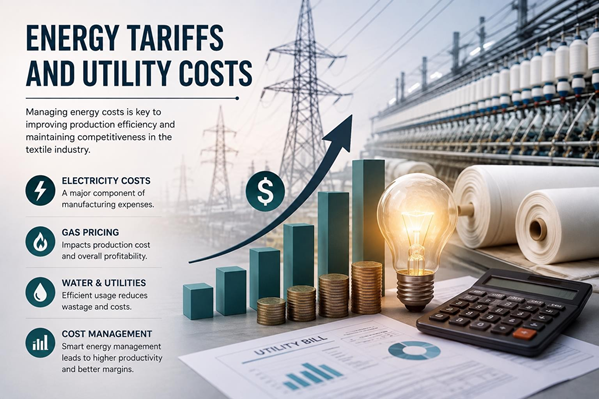
Benefits of Competitive Energy Pricing
Affordable industrial energy allows manufacturers to:
- Reduce production costs
- Increase exports
- Improve profit margins
- Expand production capacity
Challenges
Frequent tariff revisions and rising energy costs can:
- Increase manufacturing expenses
- Delay expansion plans
- Reduce competitiveness against regional competitors
3. Taxation Policies
Tax reforms have a significant influence on the textile sector. Important areas include:
- Sales tax
- Income tax
- Customs duties
- Withholding taxes
- Import duties on machinery
Positive Outcomes
Tax incentives encourage manufacturers to:
- Upgrade production facilities
- Purchase advanced machinery
- Increase exports
- Invest in automation
Challenges
Manufacturers often face:
- Delayed tax refunds
- Complex documentation
- Compliance burdens
- Cash flow constraints
Streamlined taxation systems can greatly improve operational efficiency.
4. Import Policies for Machinery
Modern textile production requires advanced machinery. Government policies that reduce import duties on:
- Weaving machines
- Spinning equipment
- Dyeing machinery
- Finishing equipment
- Digital textile printing machines
allow manufacturers to modernise production.
Benefits include:
- Higher productivity
- Better fabric quality
- Lower production costs
- Reduced wastage
- Increased export potential
5. Export Financing Schemes
Many textile manufacturers rely on government-supported financing to manage working capital. Export financing helps businesses:
- Purchase raw materials
- Meet large export orders
- Upgrade equipment
- Expand manufacturing capacity
Access to affordable financing is particularly important for small and medium-sized textile businesses.
6. Industrial Modernisation Programs
The government continues encouraging manufacturers to adopt:
- Automation
- Smart manufacturing
- Digital production planning
- Quality control systems
- Industry 4.0 technologies Modernisation improves:
- Productivity
- Product consistency
- Worker safety
- International competitiveness
Manufacturers investing in technology are generally better positioned to attract global buyers.
7. Sustainability and Environmental Regulations
International buyers increasingly require environmentally responsible manufacturing.
Government regulations now encourage:
- Water conservation
- Wastewater treatment
- Renewable energy adoption
- Reduced carbon emissions
- Sustainable chemical management
Manufacturers complying with environmental standards gain advantages such as:
- Access to premium international markets
- Better brand reputation
- Long-term cost savings
- Stronger buyer confidence
8. Labour Laws and Workforce Development
The textile industry is one of Pakistan’s largest employers. Government initiatives focusing on:
- Skills development
- Worker safety
- Labour compliance
- Technical training
help improve workforce productivity. A skilled workforce leads to:
- Higher production efficiency
- Better quality products
- Reduced defects
- Greater customer satisfaction
9. Foreign Investment Policies
Investment-friendly policies encourage both local and international investors to establish textile manufacturing operations in Pakistan.
Benefits include:
- Technology transfer
- Employment generation
- Modern production facilities
- Increased exports
- Stronger supply chains
Foreign investment also helps manufacturers adopt international production standards.
10. Trade Agreements and International Market Access
Pakistan benefits from several trade agreements that provide improved market access. These agreements help manufacturers:
- Export with lower tariffs
- Reach new customers
- Diversify export destinations
- Increase foreign exchange earnings
Expanding into emerging markets reduces dependence on a limited number of export destinations.
Challenges Facing Textile Manufacturers Despite Government Support
Although government initiatives offer numerous benefits, manufacturers still encounter several obstacles.
Rising Energy Costs
Increasing electricity and gas prices continue to pressure production costs.
Policy Uncertainty
Frequent policy changes make long-term planning difficult.
High Inflation
Inflation affects:
- Raw material prices
- Transportation costs
- Labour expenses
- Financing costs
Global Competition
Manufacturers compete with countries offering:
- Lower labour costs
- Better infrastructure
- Faster logistics
- Stronger government incentives
Currency Fluctuations
Exchange rate volatility impacts both import costs and export revenues.
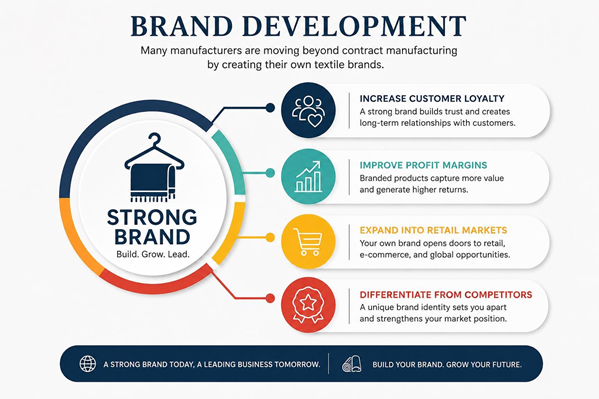
How Textile Manufacturers Can Benefit from Government Policies
To maximise available opportunities, manufacturers should:
- Stay updated on government policy changes.
- Invest in modern textile machinery.
- Focus on export-oriented production.
- Improve sustainability and environmental compliance.
- Adopt digital manufacturing technologies.
- Strengthen quality management systems.
- Explore new international markets.
- Build long-term relationships with global buyers.
The Future of Pakistan’s Textile Industry
The future of Pakistan’s textile industry depends on collaboration between government, manufacturers, exporters, and investors. Stable policies, affordable energy, improved infrastructure, and continued investment in technology will determine the industry’s ability’s to compete globally.
Manufacturers that embrace innovation, sustainability, and value-added production are likely to benefit the most from evolving government initiatives. With strategic planning and consistent policy support, Pakistan can further strengthen its position as one of the world’s leading textile-producing nations.
Conclusion
Government policies play a decisive role in shaping the success of textile manufacturers in Pakistan. From export incentives and tax reforms to energy pricing and sustainability regulations, each policy directly influences production costs, profitability, and global competitiveness.
While challenges such as rising energy costs, inflation, and policy uncertainty remain, the industry’s long-term outlook is promising. Manufacturers that invest in modernisation , sustainability, and value-added products while leveraging available government support will be better equipped to thrive in both domestic and international markets.
As Pakistan continues to refine its industrial and trade policies, the textile sector has the potential to achieve stronger export growth, create more employment opportunities, and reinforce its position as a key contributor to the national economy.